Plastics are deeply rooted in our day to day lives. In fact the word plastic is so familiar that right from the moment we wake up in the morning till we go to the bed at night, we are surrounded by them. We use plastic in our toothbrushes, in our cell phones, utensils, furniture, flooring, piping, cars, toys, office supplies, sanitation products and where not. We cannot imagine our lives without this compound which was invented in the late 19th century.
The Greek philosopher Plato, very rightly said that “ Necessity is the mother of inventions”. The saying is very true in the case of plastic. More importantly, the modern world has added another word to the saying. The word is ‘PROFIT’. First synthetic plastic was invented in 1869 by John Wesley Hyatt, who was inspired by a New York firm’s offer of 10,000 dollars for anyone who could provide a substitute for ‘ivory’ (a natural polymer found in animals) to make billiards. Second very important invention of synthetic plastic was ‘Bakelite’, a very good insulator and this was developed as a substitute to natural polymer celluloid. Similarly on going through the history of plastic inventions, it can be concluded that plastic invention was started to have a substitute for natural polymer from our natural resources like plants and animals. The idea was very kind but is the biggest problem of recent times. With the increasing need and greed of mankind, today we are producing more than 300 million tons of plastic every year and out of this 10 million tons of plastic waste per year goes into oceans and the rest are dumped in landfills or are littered on the surface. In all cases affecting our mother nature very badly. Irony is that it was invented to reduce burden on our natural resources. Apart from taking a toll on our mother nature, it has entered into us through our food. It has been found in blood streams and urine of humans in measurable amounts, which is really a matter of concern since it has been known to cause cancer and other life threatening abnormalities.
Based on use of plastic, it can be categorised into two main categories: reusable plastics and single use plastics. Major threat to the environment is mostly by single-use plastics. Single use plastic is mostly used in packaging industries for example high density polythene (HDPE) i.e. the plastic bag which we get in every market very easily to carry our groceries. In fact one third of plastics produced are used in packaging.
Talking of reusable plastics, these also contain the ill effects of plastic. But since they are reused and not thrown away as waste, the damage it does to the environment is reduced to great extent. Add to this the energy saved by not needing to produce extra plastic aided by its reuse. The matter of serious concern however is that only 9% of all the plastic produced is recycled every year.
Here are some statistical data related to plastics (collected from google):
- Production of plastic is increasing exponentially every year. From 2.5 million tons in 1950 to 448 million tons in 2015, and this is expected to double till 2050.
- Approximately 8 million tons of plastics flow to oceans every year with 5.25 trillion tons of macro and micro plastics already present there.
- 100% marine turtles, 59% whales, 36% seals & 40% sea birds are affected by these micro and macro plastics in the ocean.
- Worldwide, every minute 1 million tons of plastic bottles are bought and 2 million tons of plastic bags are used.
Clearly, plastic is wreaking havoc on the environment and life on earth. Let us discuss some of the harmful effects of plastic on our environment.
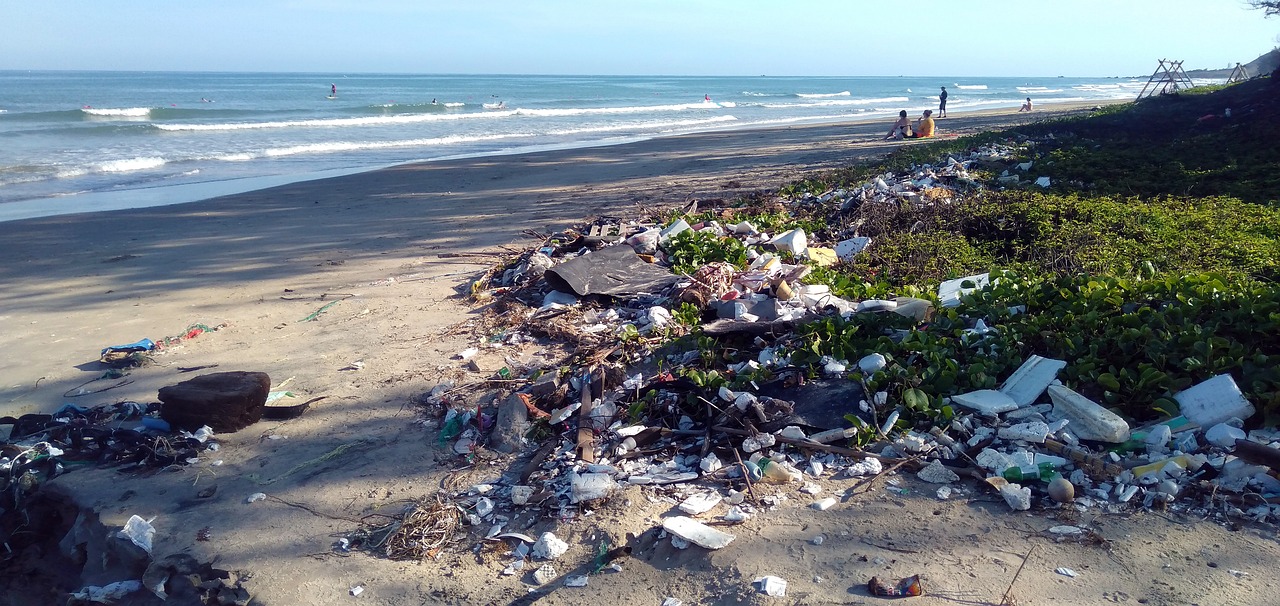
Plastic is not completely biodegradable, a property which is responsible for all mess created by it. Once plastic is produced, it just keeps getting broken into smaller and smaller pieces through its uses, leading to formation of micro plastics which flows to the oceans through rivers and has formed huge piles of debris on deep seafloor.
In a survey, it was found that on an average, a plastic bag is used for just 12 minutes. And this single plastic bag keeps polluting our environment for thousands of years one way or the other. The plastic waste that is used as landfill badly affects the fertility of the soil.
Plastic waste that is present on land surface is often eaten by animals such as cows, dogs and other stray animals. This badly affects their health and in most cases turns fatal.
Millions of marine mammals, turtles and seabirds are killed by plastic pollution annually. Millions of fish eat the micro plastics present in water bodies and these micro plastics find their way into humans through consumption of fishes. In fact micro plastic is present in most of the food products consumed by humans. According to a study, an average person consumes 70,000 pieces of micro plastics every year.
Another study has revealed that nano plastics which are present in air get negatively charged and can directly pass through the pores of human skin and enter into our body. Two broad categories of such chemicals are bisphenol-A (BPA) and diethylhexyl phthalates (DEHP). BPA has been recognised as an endocrine disrupting chemical that interferes with normal hormonal function of the human body. DEHP, which is present in commonly used medical devices such as IV fluid bags, goes directly in the bloodstream without any detoxification. These harmful chemicals get detached from the long chains of the polymer present in plastic due to exposure to sunlight/UV rays.
Now that the world has acknowledged this menace, various steps are being taken worldwide to reduce plastic pollution. Below are some of these steps (to be discussed separately in detail)
- Banning or restricting production and use of single use plastic.
- Renewed focus on recycling more and more plastic.
- Regular cleaning of plastic waste from rivers and beaches.
- Reduced use of products containing micro plastics especially cosmetics products like shampoo, face wash etc.
Apart from these, awareness programmes are also organised for masses to inform people about plastic pollution and its harmful effect.
During the past 150 years, plastic has become an inseparable part of our lifestyle. And this lifestyle has cost our environment very dearly. It’s high time we change our lifestyle and eliminate or reduce the use of plastic for the sake of the environment and future generations to come.